A Training Belt Helped New Stoma Patients Build Skills and Ease Anxiety: What a 2026 Trial Found
A 2026 randomised controlled study published in Nursing Open found that intestinal stoma patients who practised care using a specially designed training belt showed stronger skills, better adjustment, and lower anxiety than those who received standard instruction alone.
Listen to this article · AI-generated narration
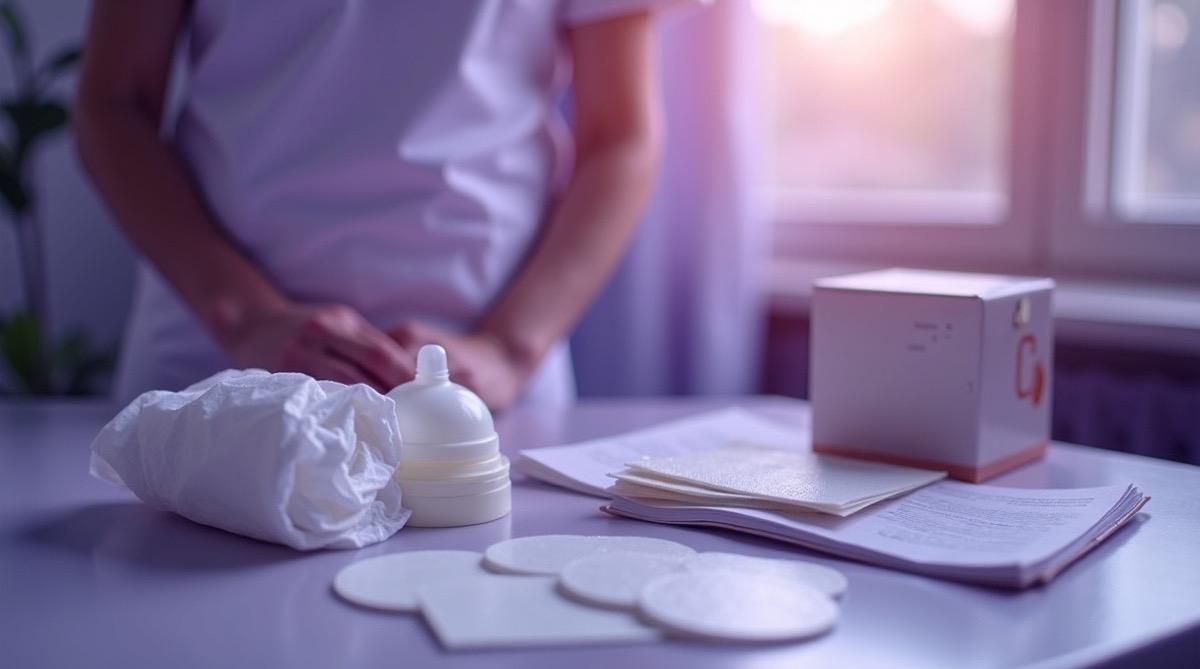
Learning to care for a stoma after surgery takes more than a hospital handout.
After ostomy surgery, most patients need to master a practical set of skills before they leave hospital: how to empty and change a pouch, how to assess the peristomal skin, when to contact their stoma care nurse. For many people, this learning happens at a time of significant physical and emotional stress.
The NHS notes that adjusting to life with a stoma, including mastering the day-to-day care routine, takes time, and that early contact with a stoma care nurse plays a central role in recovery support.[^1]
The hands-on component has always been the challenge. Patients often find it difficult to practise on themselves when they are anxious or unwell, and learning on the actual stoma in the first days after surgery carries risks to the surrounding skin.
What is a stoma care training belt?
A stoma care training belt is a wearable simulation device worn around the abdomen that replicates the position and appearance of a stoma, allowing patients to practise the full care routine (pouch attachment, barrier placement, skin inspection) without working on the stoma itself.
Because the belt can be used before and after surgery, and repeated as many times as needed, it allows patients to build confidence and muscle memory in a lower-stakes setting, at a pace that suits them.
What the 2026 trial found
A 2026 randomised controlled study published in Nursing Open set out to measure whether a structured training belt intervention changed outcomes in patients with intestinal stomas.[^2]
The trial compared patients who received stoma care instruction that included training belt practice against a control group who received standard instruction alone.
Compared with the control group, patients in the training belt arm showed:
- Better stoma care skills: the practical ability to manage the stoma independently
- Better stoma adjustment: adapting to daily life with a stoma, including routine and body image
- Lower anxiety: reduced anxiety scores in the training belt group
- Higher satisfaction with their care experience
The study assessed all four of these outcome domains explicitly, making it one of the more comprehensive evaluations of a structured ostomy education intervention to date.
Beyond the technical skill
Two things stand out from this trial.
First, the outcomes extend well beyond skill. Adjustment and reduced anxiety are not automatic side-effects of learning how to change a pouch. They require deliberate support. The fact that a structured practice opportunity improved all four domains suggests that the mechanism is broader than just competence: having a safe space to rehearse reduces the fear of getting it wrong.
Second, simulation tools complement the stoma care nurse relationship rather than replacing it. The training belt gives patients a way to rehearse when they feel ready, at their own pace, and to arrive at nurse consultations with more specific questions rather than starting from zero.
For patients preparing for ostomy surgery, asking your stoma care nurse about structured skill-building and practice opportunities is worth raising before discharge.
Sources
Please consult your stoma nurse or specialist before discharge about what structured education and hands-on practice options are available in your care setting. Your healthcare team can advise on which skills to prioritise, what signs or changes in your stoma warrant an in-person review rather than self-management, and how to access ongoing support after leaving hospital.
How we source and license content
Content ID: OF-C5A31EQuote this ID in a copyright or correction request.